New Delhi [India], May 16: As Indian students increasingly explore diverse academic and career pathways after Class 10 and 12, education experts are calling for a more structured approach to career planning. From choosing the right subjects and preparing for international education to exploring skill-based careers such as nursing and arranging education loans for overseas studies, families today need an integrated roadmap that goes beyond traditional admission guidance.
With global education becoming a strong aspiration among Indian families, students are no longer looking only at degrees, but also at employability, affordability, practical exposure, international mobility and long-term career outcomes. Career planning should begin much earlier, especially at the school level, so that students and parents can make informed academic, financial and professional choices.
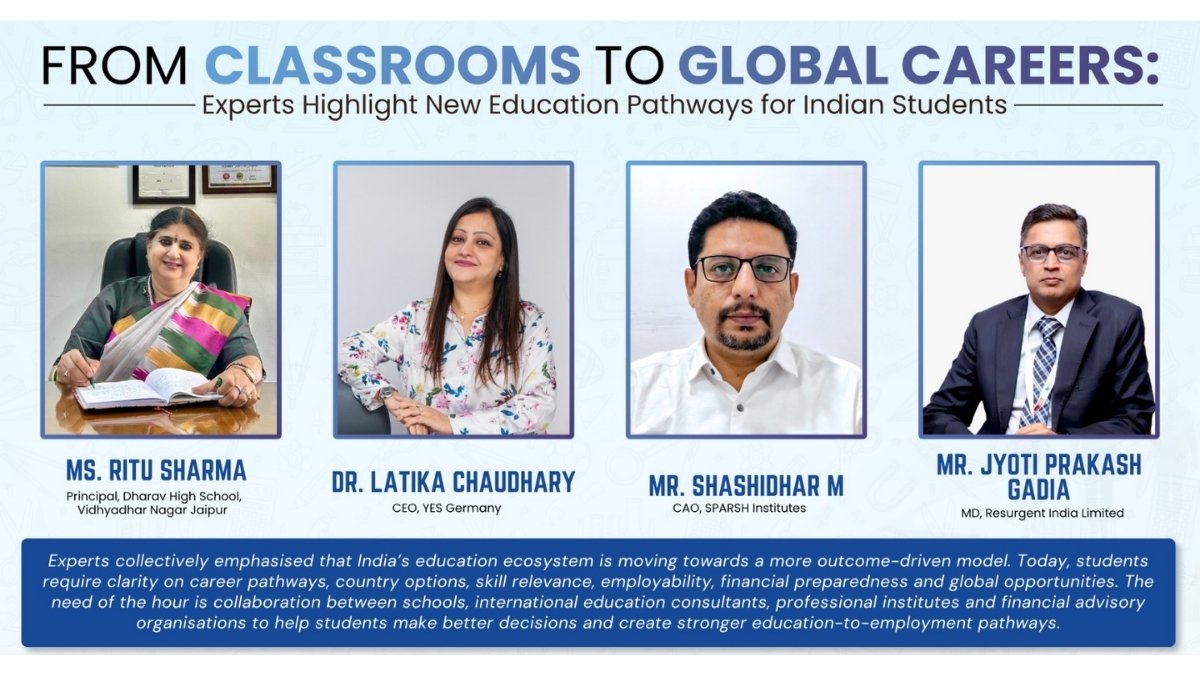
Speaking on the importance of early career guidance, Ms. Ritu Sharma, Principal, Dharav High School, Vidhyadhar Nagar Jaipur said, “A strong foundation for career planning begins with early exposure and informed guidance. Career planning should not begin only after board results. Students need the right exposure from Class 8 and 9 itself, so they can understand their interests, academic strengths and long-term goals. Schools play an important role in helping students and parents evaluate different pathways, whether higher education in India, study abroad or skill-based professional careers. Career guidance today must go beyond subject selection and examination preparation; it should focus on developing self-awareness, adaptability and future-readiness. The objective should be to prepare students not just for exams, but for life beyond the classroom.”
International education is also witnessing a clear shift, with students and parents looking at destinations that offer academic quality, affordability, industry exposure and better career outcomes. Germany, in particular, is gaining attention among Indian students because of its globally recognised universities, research-led programmes, strong engineering and technology ecosystem, and relatively affordable education compared to several other popular study-abroad destinations.
Dr. Latika Chaudhary, CEO, YES Germany said, “Germany is emerging as a preferred destination for Indian students seeking quality education, practical learning, and strong career opportunities across engineering, management, computer science, healthcare, applied sciences, and research. Students today also have the opportunity to study at globally reputed German institutions ranked higher than many IITs, often at a lower cost than private institutions in India. However, studying in Germany requires careful planning around course selection, academic eligibility, language preparation, university shortlisting, application timelines, and visa documentation.”
Dr. Latika further emphasized that admission standards have become more streamlined yet rigorous. “From the Winter Semester 2026/27 onwards, Indian students applying for bachelor’s programs must secure a minimum of 70% in their Class XII board exams to qualify for the mandatory APS (Akademische Prüfstelle) certification. Additionally, since Indian schooling is shorter than the German system, students generally need to complete one year of a recognized bachelor’s degree in India or attend a Studienkolleg in Germany. Studienkolleg prepares international students academically and linguistically for German higher education, after which they can apply to Germany’s public universities that offer highly affordable or tuition-free education.”
While international education continues to be a key aspiration, experts also point out that professional and skill-based education in healthcare is becoming an important pathway for students. Nursing is being seen as a meaningful career option with opportunities across India and global healthcare systems.
SPARSH Nursing College, RR Nagar, established in 2023 with its first batch of 40 students, follows a hospital-integrated training model through SPARSH’s own multi-specialty hospital. The college provides early clinical exposure, bedside observation and training in hospital systems, rotations across units and guidance from experienced faculties’ senior nurses and in-house doctors and senior consultants. Its student intake has grown from 40 in academic year 2023, 2024 to 100 students from the academic year 2025.
Mr. Shashidhar M, CAO, SPARSH Institutes said, “Nursing education today needs to combine classroom learning with practical clinical exposure. At SPARSH Nursing College, students receive hospital-based training, hands-on observation and guidance from experienced professionals. Our focus is to help students become confident, capable and industry-ready for healthcare opportunities in India and abroad.”
Along with academic and career readiness, financial planning has become one of the most critical parts of education decision-making, especially for families considering overseas education. Tuition fees, living expenses, visa-related financial documentation, collateral requirements, margin money, repayment structure and currency fluctuations can all impact the overall study abroad journey.
Mr. Jyoti Prakash Gadia, Managing Director, Resurgent India Limited noted, “The rapid expansion of the education sector necessitates a transition from traditional funding to more structured institutional financing. As universities and professional colleges scale to meet global standards, the primary challenge lies in securing long-term capital for infrastructure and technology integration. For education institutions, funding is assessed more on the strength of the operating model, enrolment stability, fee visibility and repayment capacity. Land value may add collateral comfort, but the credit case is built on underlying economics.”
Mr. Gadia further added, “A lender will also look at capex phasing, promoter contribution, historical repayment behaviour, and the risk of overbuilding capacity ahead of demand.”
Experts collectively emphasised that India’s education ecosystem is moving towards a more outcome-driven model. Today, students require clarity on career pathways, country options, skill relevance, employability, financial preparedness and global opportunities. The need of the hour is collaboration between schools, international education consultants, professional institutes and financial advisory organisations to help students make better decisions and create stronger education-to-employment pathways.
If you object to the content of this press release, please notify us at pr.error.rectification@gmail.com. We will respond and rectify the situation within 24 hours.