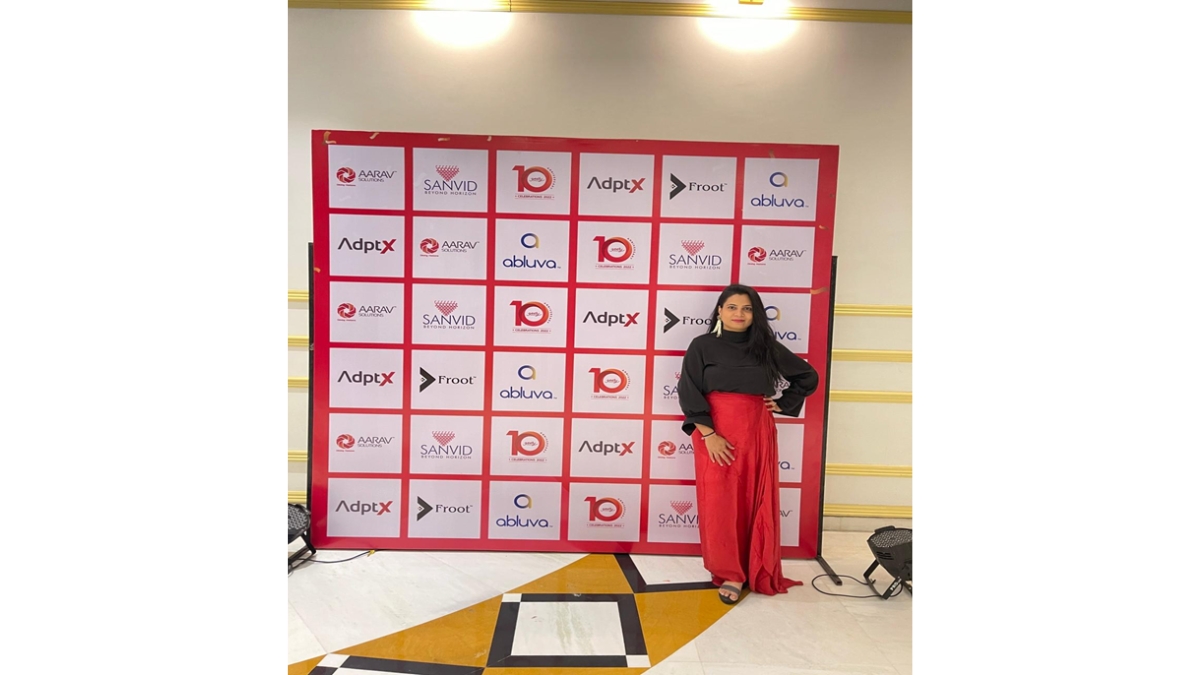
New Delhi [India], August 11: Software engineering is undergoing one of its most significant transformations in a generation as artificial intelligence moves beyond simple code assistance and begins performing increasingly complex development tasks. AI-powered tools can now write features, generate documentation, create and execute tests, identify bugs, and prepare pull requests for human review.
According to technology professional Kinjal Chauhan, M.S., SAS Certified Base Programmer, this shift is redefining the role of software engineers while simultaneously creating new challenges around code quality, cybersecurity, data privacy and human oversight.
Chauhan specializes in Artificial Intelligence, Data Analytics, Statistical Programming, Enterprise Information Systems and Digital Transformation. She holds two Master of Science degrees—one in Information Systems Engineering and Management and another in Project Management—giving her a multidisciplinary perspective on technology, enterprise systems, analytics and strategic project leadership.
From Autocomplete to Autonomous Coding
AI coding technology has evolved considerably in recent years. Earlier tools primarily predicted the next line or segment of code. Today’s systems can analyze much larger portions of a software project, including architecture, dependencies, databases and multiple repositories.
Platforms such as Cursor, Claude Code, GitHub Copilot and Gemini Code Assist are increasingly being used for more complex development workflows. AI coding agents can take an issue or development task, identify relevant files, generate the required code, execute tests, troubleshoot failures and prepare a pull request with comparatively limited human intervention.
The expanding AI development ecosystem now includes full AI-powered coding environments, inline programming assistants, UI-generation platforms and enterprise-grade tools designed to identify technical debt, coding issues and potential security vulnerabilities.
AI-Generated Documentation Addresses a Longstanding Problem
Software documentation has traditionally struggled to keep pace with rapidly changing codebases. Documentation created during the initial development phase can quickly become outdated as applications evolve.
AI is beginning to change that process by treating documentation as an ongoing part of software development. Tools such as Mintlify and Apidog can analyze code structures and automatically generate documentation, API specifications, and other technical resources.
For organizations, AI-powered knowledge systems could also make it easier for developers and new employees to access technical information through conversational interfaces rather than searching through outdated wikis and documentation repositories.
Testing Enters a New Phase
Software testing is also being transformed by AI. Modern AI-driven quality assurance tools can analyze code branches and identify potential edge cases involving issues such as null references, overflow conditions, and unexpected application behaviour.
Another emerging development is the use of AI for self-healing automated tests. User-interface tests have historically been vulnerable to minor changes in layouts, buttons and CSS elements. AI-powered platforms can identify components based on their surrounding context and semantics and automatically adjust tests when an interface changes.
This approach could reduce unnecessary test failures and allow development teams to spend more time addressing genuine software defects.
Security Risks Grow Alongside AI Adoption
Despite the productivity benefits, the rapid adoption of AI coding tools is creating a new set of security concerns.
AI models can sometimes reproduce outdated coding practices or generate vulnerable implementations. One particularly concerning issue is the possibility of “package hallucination,” where an AI system recommends a software library that does not actually exist.
Cybercriminals could potentially exploit this behaviour by registering malicious packages under names generated by AI systems. Developers or autonomous coding agents could then unknowingly download compromised software.
AI coding assistants themselves can also become targets. Malicious instructions embedded in websites, documents or repositories may attempt to influence AI systems when they access and process external information. Such risks have increased the importance of securing the interaction between AI agents, software repositories and external data sources.
Organizations are responding with stronger AI security controls, including real-time code scanning, automated pull-request reviews, data protection measures and controls designed to prevent sensitive information and credentials from being transmitted to external AI platforms.
The Software Engineer’s Role Is Changing
Chauhan believes the rise of AI-powered development tools is not simply about replacing programmers. Instead, it is changing the responsibilities of software engineers.
As AI takes over more repetitive coding tasks, developers are increasingly moving toward roles focused on architecture, system design, problem definition, code review, testing and strategic decision-making.
The productivity gains can be significant, but they also introduce a new responsibility: developers must understand and evaluate AI-generated code rather than treating AI output as automatically reliable.
The Future Will Depend on Human-AI Collaboration
The transformation of software engineering ultimately highlights a fundamental challenge: generating code faster does not necessarily mean producing better or safer software.
Organizations that successfully adopt AI-assisted development are likely to be those that combine AI’s speed with strong engineering controls. Human code reviews, continuous testing, security monitoring and clear governance frameworks will remain essential even as AI agents become more capable.
The future of software engineering, therefore, is unlikely to be defined by a choice between humans and AI. Instead, it will increasingly depend on how effectively organizations combine AI-driven productivity with human expertise, judgment and accountability.
If you object to the content of this press release, please notify us at pr.error.rectification@gmail.com. We will respond and rectify the situation within 24 hours.